
How to Search Civil Dockets
Start with Minnesota Court Records Online (MCRO). It is the public entry point for an eligible Nobles civil case. Pick Name, Case Number, or Attorney. Add the Civil category and Nobles County location when a name search needs narrowing. A trailing wildcard works after at least two characters. A Sounds Like option exists too. You cannot combine the two. A complete MNCIS case number gives the most direct match. The Case Details view is the Register of Actions. Before reading the events, confirm the county, case type, date filed, and party roles. One civil docket may hold ordinary civil, family, probate, or conciliation matters. The category and the event sequence both matter. If an eligible document is missing from remote access, try Document Search. The courthouse terminal and a specific copy request are the other options.
- Accept MCRO’s public-use terms and select the Name, Case Number, or Attorney search tab.
- Enter the known information, choose Civil when it fits the case, and select Nobles County from the court locations.
- Open the matching Case Details result and confirm the case number, filing date, venue, and party roles.
- Read the Register of Actions for pleadings, service, motions, settings, orders, and disposition entries.
- Use the terminal or Court Administration when the public remote record does not contain the needed document or copy.
Nobles County Civil MCRO Search
MCRO is one statewide system. There is no separate Nobles civil portal. Its Name search accepts Person or Business. You can enter a last name, optional first and middle names, and date of birth. Filing-date filters, case category, case status, and a county selector round out the form. The live control shows the Case Status choices. Treat any label as a label. Do not assume it means judgment, dismissal, or settlement. With a known civil number, Document Search accepts the full case number. You may drop the dashes and leading zeros there. Spaces are not accepted. Results come newest first, and View Document opens a public PDF when remote access permits. After a document search, use the MCRO breadcrumbs instead of the browser Back button. Note: Read the live Case Status choices as labels, not assumed legal outcomes.
What a Civil Docket Shows
A Nobles civil Register of Actions can show case information. Plaintiff or petitioner and defendant or respondent roles appear, along with attorneys, filing date, and court location. It can also list judicial officer, events and documents, settings, related cases, judgment details, satisfaction information, and financial fields where they apply. Some things stay hidden. Personal information, confidential family or probate material, and certain documents may be excluded from remote display. An event title is only an index entry. It is not the text of a pleading or order.
| Case Number | The MNCIS identifier. Nobles civil examples use the county prefix 53, such as 53-CV-YY-####. |
|---|---|
| Parties | Public roles such as plaintiff, defendant, petitioner, respondent, or intervenor, with attorney information when allowed. |
| Events | Recorded pleadings, service, motions, notices, orders, hearings, continuances, and disposition entries. |
| Hearings | Scheduled dates, times, setting types, locations, and judicial-officer data when public. |
| Judgment | Judgment parties, amount or details, satisfactions, and interest-related totals where the case view provides them. |
Use the date and the document index number to connect a public event to its document. A listed complaint, answer, order, or judgment does not replace the underlying public instrument. Read that text when its legal effect matters.
Nobles County Civil Event Sequence
A civil case usually starts with a complaint or petition and the opening case information. From there, the public event history may show summons or citation issuance and proof or return of service. An answer, response, or counterclaim may follow. So may motions, memoranda, affidavits, notices, orders, and hearing settings. The sequence runs through settlement, dismissal, judgment, default judgment, or another disposition. Satisfaction or appeal events sometimes follow. Always read entries in context. A Complaint Filed event records a party's filing, not a judicial finding. A service event can show that a document was filed or returned. The public document itself may carry a separate access status. A settlement conference or evidentiary hearing is a scheduled court event. It is not a settlement agreement or a final order, unless the record identifies that later result. Note: An event title is an index entry. It may not contain the complete court document.
Nobles County Civil Conciliation Dockets
Conciliation Court is a division of Nobles County District Court. No separate city or justice court runs it. Under Minn. Stat. §491A.01, the statewide limits apply. They are $20,000 for general civil claims and $4,000 for consumer-credit claims. The statutory ceiling helps determine the division. The Register of Actions, MCRO search, Court Administration contact, and copy route all sit inside the same District Court system. The court offers no separate Nobles city civil-docket portal, justice-court portal, or probate-clerk portal. An incorporated city can matter for where a dispute began. A court-filed Nobles civil case is searched through its county District Court venue and MNCIS number.
Types of Civil Cases on the Docket
MCRO's Civil category is an efficient starting filter. Still, the Nobles District Court record environment is broader than one type of lawsuit. Public case access and remote document coverage vary by category. Family, probate, guardianship, conservatorship, and conciliation records are different. They can carry different access limits than ordinary civil cases. Confirm the case type first. Only then apply any definition of a filing, party role, or disposition.
- Ordinary civil actions, including claims, property disputes, and other civil filings in District Court.
- Conciliation matters within the statutory limits for the District Court division.
- Family matters, which may have narrower remote document access.
- Probate, guardianship, conservatorship, and trust matters administered in the District Court record system.
- Special proceedings where the public case category and document coverage depend on the access rules.
There is no separate Nobles municipal civil docket to search. A city office may keep its own documents, but a court-filed civil claim, order, or judgment stays part of the Minnesota District Court case record.
Nobles County Civil Settings
The Nobles daily District Court Calendar is the public place to check civil settings. Each entry carries fields for Hearing Location, Hearing Date, Time, Judicial Officer, Hearing Type, Connection Type, and Case Number. Civil matters show up under local labels. Examples include Settlement Conference, Administrative Conference, Evidentiary Hearing, and Eviction Hearing. Want the full history for one case? The Case Details Hearings block lists both scheduled and prior hearings.
Fresh postings go up every business day. Updates arrive hourly. Still, the calendar does not carry every matter. A participant's hearing notice remains the most authoritative source, especially when appearance is remote. For the fuller sequence, see the Nobles County court calendar process. It covers checking a date, a courtroom, and a setting type in order.
Settings and Hearings on Civil Dockets
Read a civil setting as a scheduled step, not a finished result. The Register of Actions and the daily calendar may list a notice of hearing, settlement conference, motion hearing, evidentiary hearing, or administrative conference. What came of it is another question. A later order, case event, or disposition shows the outcome. It tells you whether the hearing was held, continued, resolved, or moved. That distinction matters when a date sits online. The case may have since been continued or reset.
Continuances face a high bar in the Fifth Judicial District, especially for trial dates. Most written requests must state the reason. They also show notice to other parties, say when the need arose, describe steps taken to avoid the request, and give the other side's position. The court weighs good cause case by case. For a current scheduling question on your case, call Court Administration. Do not assume an online setting has changed.
Note: A continuance requires the court's action and is not established by a request alone.
Nobles County Civil Judgment Details
Judgment Details sit apart from the first civil event list. MCRO supplies them at times. They can show judgment parties, amounts or details, satisfactions, and interest-inclusive totals. Read any judgment entry alongside its date, the parties, related-case fields, and any appeal event. After a monetary judgment, a satisfaction can matter a great deal. Do not assume one from a case-status label alone.
Always search and request copies with the precise case number. The result may point to a related case, transfer, consolidation, or appeal. Follow that reference before concluding a Nobles civil docket is complete. A certified judgment is its own court-copy product. It is not a printout of the free event list.
Nobles County Civil Filing Layers
Civil filings move through distinct layers, and knowing them saves confusion. Minnesota eFile and eServe handles electronic filing and service. MCRO is the public search and eligible-document view. The MNCIS/MPA terminal at the courthouse opens the broader public electronic access channel. Together these layers explain a common puzzle. A pleading can be filed, entered as an event, and still lack a remote PDF. When a document is missing remotely, use a public terminal. A specific copy request works too.
Attorneys and government users file and serve through eFS by rule. Self-represented users may join voluntarily. For the public searcher, the Register of Actions comes first. Identify the document name, date, or index number. Then request the public copy through MCRO, the terminal, or Court Administration.
Public Access to Civil Dockets
The Minnesota Rules of Public Access to Records of the Judicial Branch govern court records. They control inspection, copies, and remote access. Many Major and Minor Criminal and Civil documents carry broad remote coverage. The cutoff is filings made after July 1, 2015. Family and post-adjudication paternity material is narrower. Confidential, sealed, juvenile, domestic-abuse, harassment, civil-commitment, CHIPS, and delinquency material may be limited or excluded entirely. For a public-access question, use the courthouse terminal and Court Administration.
Access rules: Minnesota Rules of Public Access describe public and remote case-record access. Minn. Stat. §13.03 sets the general government-data inspection baseline, while court records remain subject to Judicial Branch rules. Ask for the specific rule or order if a requested Nobles civil record cannot be provided.
Public access does not make every electronic channel identical. A courthouse terminal can give a broader public view than MCRO, while the copy form and Court Administration remain the path to a particular document or an authenticated copy. Note: an unavailable remote PDF does not establish that the public court record no longer exists.
Nobles County Civil Record Copies
Three copy types cause most of the confusion. A Register of Actions is only the event index. A filed document is the item behind an event. It may be the complaint, answer, motion, notice, order, judgment, or another filing. A certified copy is an authenticated copy issued through Court Administration. A request should start with the county case number and the parties. Add the document name, its date or document index number, the copy type wanted, and a delivery choice. The statewide form supports plain, certified, exemplified, and certified or exemplified options. The official copy-request forms page lays out the court-copy route.
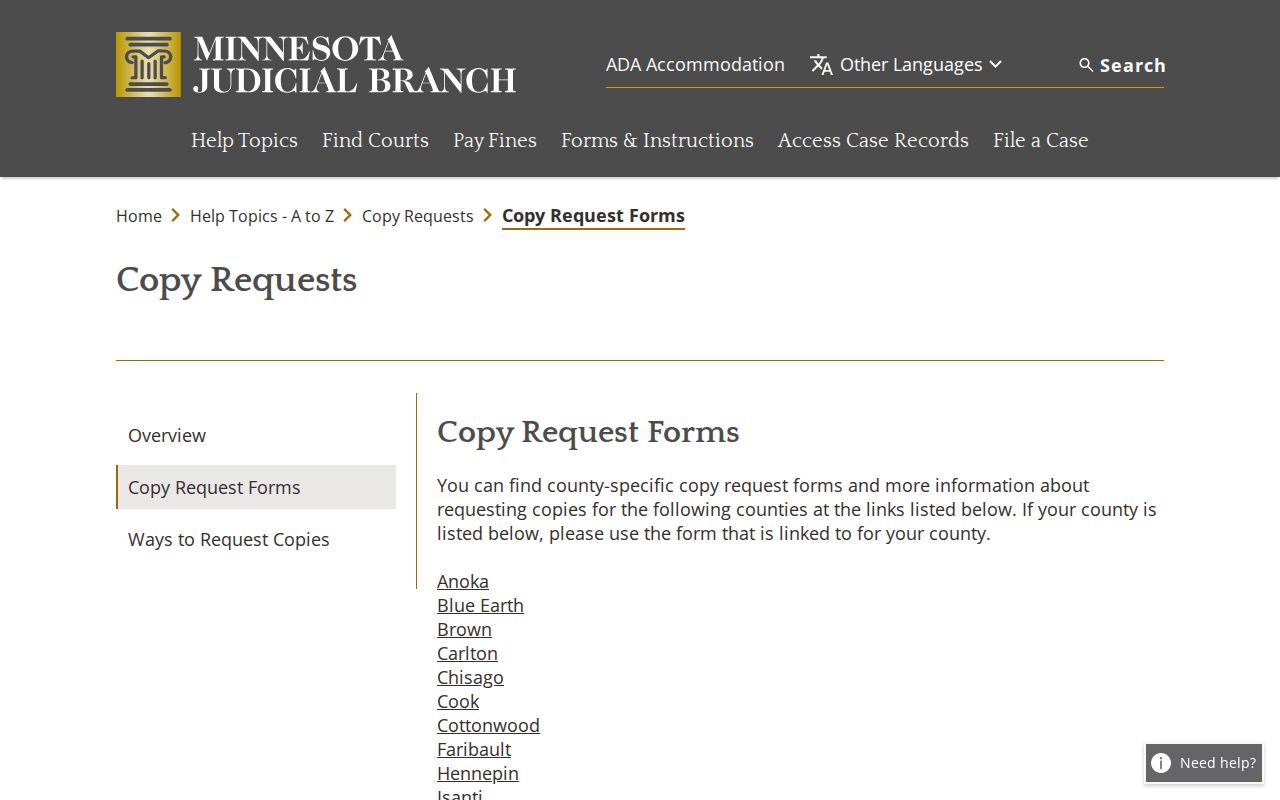
For a Nobles civil docket, name the particular public instrument you need rather than asking for an undefined collection of records. The local fee page lists $0 for several plain-copy categories, $14 per certified document, and $28 for an exemplified plus certified copy.
Nobles County Civil Docket Fallbacks
A missing online civil result is not the end of the road. Re-enter the full case number and try MCRO Document Search once more before giving up. For a wider look, head to the courthouse. Use the public MNCIS/MPA terminal there. Nobles County Court Administration, based at the Prairie Justice Center, can sort out why a record is hard to find. A civil record may be restricted, simply old, filed under another case type, or sitting in a local paper file. The same office hands out current instructions for plain, certified, or exemplified copies.
Copies can also be ordered statewide through the Court Copy Request Form. It accepts mail, pickup, plain nonconfidential fax or email, and a prepaid courier option where the form allows it. Expect no stated turnaround time. The form lists no general identification requirement either. To get smarter about the search fields themselves, the Nobles County case search page walks through name, case-number, citation, and attorney options.
Note: An event title names a filing or a setting. It does not give you the full text or the legal effect of the document behind it.